Showing posts with label diversity. Show all posts

Sunday, August 23, 2015

Reading the World: 6. Angola

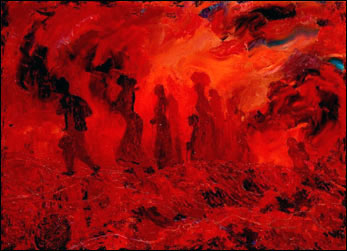
Credit: Angolan contemporary artist: Atonio Ole
As I read, I jot down observations and questions, or I research current headlines written about the country at hand. Caught up in the charm of Ondjaki's The Whistler, I did not stop to write anything. The pleasure of the language was enough.

However, at a loss to write something about The Whistler looking at headlines helped provide a touch of context:


Angola Prison and the Shadow of Slavery

The New Yorker-Aug 19, 2015
Keith Calhoun and Chandra McCormick's photographs from the Louisiana State Penitentiary at Angola, which were taken between 1980 and ...

Voice of America-Aug 14, 2015
JOHANNESBURG—. In the last decade, the nation of Angola has pulled off what some experts consider an economic miracle, transforming ...

Inonge Wina commends Angola

Zambia Daily Mail-Aug 20, 2015
VICE-PRESIDENT Inonge Wina has commended the Angolan government for putting in place a successful social protection system that ...

Angola regime rules in apartheid style - activist

News24-Aug 16, 2015
Johannesburg - From beating women to unleashing dogs on protesters, Angola's government runs the oil-rich nation with an apartheid-style ...


Clearly, Angola has been immersed in volatile change--growth and loss--over recent decades. Further digging brought me to an article about Angolan art by Joanne Thomas in USAToday:
"Contemporary life in Angola is hard. According to World Factbook, the nation has the lowest life expectancy in the world at 38.2, and 40.5 percent of the population live below the poverty line. These impoverished conditions, in conjunction with prolonged civil unrest, have marred the continuation of cultural traditions. Celebrations and traditional ceremonies, for example, were largely interrupted or discontinued during the civil war."
Thomas' objective was to explore Angolan art--previously ignored and forgotten. To have a hopeful, gentle book like The Whistler emerge is remarkable. For me, as I continue to think about the book itself, what matters more is that beautiful art is present and emerging from Angola. The Whistler underscores the importance of art in all its forms for all cultures.

In trying to match an appropriate image with this blog post, I fell into a blog called Angola Rising: Dialogue of Ministry in Angola; A Land Rising from Past Challenges. Specifically, I focused on a post about emerging Angolan art.

In it, Angolan artist Antonio Ole says, “The world is in transition. And during transitions there tend to be artistic explosions, explosions of creativity. Right now, everyone should be alert. Interpreting the world is part of what we artists do.”

My take away from the experience of reading The Whistler is that it exposed me to art as language, as a way for human beings to communicate...as evidence that art emerges, can still live, even without the nourishment I (blindly) assume all art comes from.

Ole goes on to say, “I feel very inspired by this positive energy. Development is not only about education and health; it is also about the evolution of a cultural identity."

The Whistler, and in a bigger sense the blossoming of art in Angola, gives me a new lens to view...and think about...the world, yes. But it also gives me a new lens to think about me and my place in the world.

Friday, August 21, 2015

Reading the World: 5. Albania

Adrian Limani, flourished bulb
What happens when you read a novel by an author "hailed as one of the world's greatest living writers" (according to the bookjacket) and you struggle finding any way "in" to the book?

You don't put it down even though the little voice inside your head is telling you, "just put it down...it isn't going to work out for you...put it down..."

I did not put it down. And the little voice did not go away.

So, I took notes on an envelope doubling as my bookmark as I read--not because it was difficult or to keep track of a tangled plot--but because I could not connect with the book. I kept looking for a thread to latch onto.

Part Orwell, part Kafka, part Beckett, The Palace of Dreams is Ismail Kadare's attempt at creating his version of hell. And for much of the first half of the book I engaged (a bit) even though the little voice inside my head kept murmuring, "weird..."

Wishing I knew more about Kadare's homeland, Albania, I jotted down thoughts which seemed like metaphors worth digging into later:

--the influence of dreams
--outside influences on dreams
--the value of dreams from the peasant to the king
--what kinds of information needs secrecy?
--when do dreams need to be kept secret?


And then I felt myself grasping to use anything--any shard of an historical context of the relationship(s) between the Albanians and the Turks. Kadare threaded a theme of "shared power" (and shared knowledge) and it made me curious about how historically oppositional cultures find common ground. This interesting line on page 68 kept the little voice inside my head quiet and hopeful for a beat:

"Sharing power doesn't just mean dividing up carpets and the gold braid. That comes afterward. Above all, sharing power means sharing crimes!"

But, like much of what I found interesting, this theme fell flat for me and the little voice inside my head railed on and on, "told you...if you are not enjoying a book just put it down...Kadare won't be offended because he did not write it for you anyway."

Unfortunately, the book did not work for me. I lost track of any slight scent of engagement once I reached the last 1/4 of the story as the plot just unravelled like old, cheap yarn--leaving me with little to want to discuss with other readers. For me,  The Palace of Dreams went from weird and interesting to dull and disconnected.

The reality is we are all not going to connect with every book...irrespective of author or reader, culture, or era. I believe the hype about Kadare and maybe I should give something else of his a shot.

But for now, it is on to another country...

Saturday, August 15, 2015

Reading the World: 3. Algeria

Algeria, by Dana Kyndrova
Forgiveness can only ever be shared. Regret can only ever be owned.

What the Day Owes the Night, by Yasmina Khadra takes its place among the most meaningful novels I have read in a long while. The note on the first page of the novel, "Yasmina Khadra is the nom de plume of the Alergian army officer, Mohammed Moulessehoul, who took a female pseudonym to avoid submitting his manuscript for approval by the army" grasped my attention before I read the first line: "My father was happy."

What do I have to learn about that part of the world, of culture, of history and humanity?

Much.

And even after finishing the novel, I am really only aware of just how much I have to learn to and experience.

However, what strikes me immediately about this specific book and experience is that the writing is just a pure pleasure--especially the similes and metaphors (of which there are many):
The wheat fields billowed over the plains like the manes of thousands of horses galloping.

Oran was a city of airs and graces, people referred to her as la ville americaine, and every fantasy in the world was becoming real. Perched on a clifftop, she gazed out to sea, pretending to languish, a captive maiden watching from a tower for Prince Charming to arrive. She was pleasure itself, and everything suited her.

Beyond the writing, the reason why I took on the challenging of reading the world is on full display here. While the struggle for Algerian independence comprises the setting of the novel--I found myself researching as I read--the familiarity how the characters interact carries the day. By familiarity I mean irrespective of Arab or European, I recognized jealousy and love, fear and honor, prejudice and sorrow, et al. 

Being human is familiar.

I found myself wanting to talk to someone--anyone--about the struggles between Arabs and Europeans, the wealthy and the poor in countries just like Algeria, the roles of men and women in different societies, the fact that love and honor is not a privilege of race or culture, the unwieldy tangle of the word "duty"...duty to family...duty to culture...duty to oneself...it is all here, woven together. 

So many moments of "duty" in the novel bring me back to the title What the Day Owes the Night again and again:
  • What does the father owe the family?
  • What does the mother owe the child?
  • What does the individual owe his/her culture?
  • What does the lover owe his/her lover?
We could get more specific:
  • What does Younes owe himself?
  • What does Younes owe Emilie?
  • What does Younes owe Madame Cazenave?
And my questions go on and on. These questions only scratch the surface as the book begs to be read and discussed. I'm dying to discuss it with someone--so, please, if you read this novel and you stumble upon this blog, please leave your thoughts about the book--I'm all ears (or eyes).

Finally, as bring the blog to a conclusion, I want to add how much I was affected by the balance in the novel. The author's gift and skill and being able to weave extended kindnesses among extensions of cruelty; oaths of silence with oaths of violence; and deep chasms of regret with micro-thin lifelines of forgiveness made everything else work together so well. 

I really loved the experience of reading What the Day Owes the Night because it had me thinking, has me thinking, and will continue to challenge me.

What do I (we) owe...

Thursday, August 13, 2015

Reading the World: 2. Afghanistan

"Refugees" by Afghan artist Akbar Khurasani
Inspired by the blog A Year of Reading the World: 196 countries, countless stories, I have set out to read the world as well. The more I explore the concept on the web, the more people I find who also set out on this quest. For me, on its surface, it is about exposure and challenging my purview.

While I have read adult novels and YA novels by international authors, I can't recall reading them through the lens of wanting to expose myself to more of the world: Midnight's Children, by Salman Rushdie; Shooting Kabul, by N.H. Senzai; Persepolis, by Marjane Satrapi, et al. As strange as it feels to write, I have always read (I believe) just for the sake of a good story. I'm not embarrassed by that point. But I also realize that writing and reading is too powerful a stone to not turn it over in my hands and gaze into it in new ways. I feel the same way about film.

For my first novel, I started alphabetically by country (Afghanistan) and read The Patience Stone by Atiq Rahimi.

The setting struck me. The entire story occurs in one room. In the center of the room, a war hero lies on mattress. He is motionless, breathing, perhaps conscious. A bullet is lodged in his neck. His portrait hangs on one wall alongside a khanjar or dagger.

The curtains, tattered with holes, hang miserably over the only window. No electricity exists. Gunshots, the groan of tanks, boots on gravel interrupt the story just as quickly as they fade into the distance.

Fog, smoke, darkness. Rain. Patches of blue sky. Thin veils of sunlight. The crunch of broken glass underfoot. Stale bread and a slice of onion. Soot. Spiders. A dead fly.

The setting of The Patience Stone was present in its grittiness.

I am reminded of set design for theater. No amount of light, electricity, paint, wood, or dry ice can create a world on stage without an artist's eye behind it. By that I mean some directors and stage designers fail as much as some succeed. Some take risks. Some cram imaginative ideas onto a set even when it really does not work. A great set design and execution is a part of the story telling experience.

With that in mind, the setting in The Patience Stone resonated with me. As I read, I felt present in a darkened theater. Rahimi led my eyes around the stage. He brought in my sense of hearing. He let me linger. He let me stare at the stillness on his stage.

I am comparing it to when I saw W;t in the late 90s and how I was struck by the rawness of emotion--and nothing distracted me from that grounding, central experience. The rawness of emotion in The Patience Stone came alive because of the setting. This was not a story taking place in no time and no place--but a story taking place in a very specific time and very specific place. And it mattered.

And all it took was one room.

The scorched Earth (and lives) in The Patience Stone are what I will take with me moving forward as I continue to read the world. I will file this away for when I return to Afghanistan for another novel.

Thursday, August 6, 2015

Reading the World: 1. Nigeria

I
In an effort to help students grow as readers, we conference one-on-one about their choices. How they find books. What they like, don't like, want to try next. So much of the reading in my classroom is driven by choice.

Some conversations drift towards goal-setting. Specifically, we discuss reading books by authors from different parts of the world or books based on characters from diverse cultures. We discussed noticing authors: where they were from, what was unique about their life experience, and what details made it into the authors' bios.

It was a new way for some of my students to find books. And some found it an interesting challenge.

Swallowing my own advice, I decided I wanted to read Americanah by Chimamanda Ngozi Adichie. It would be--as far as I knew--my first novel by a writer from Nigeria. It arrived and took a space in my book pile beneath my standard, comfortable fare of nonfiction and contemporary fiction: Napolean: A Life by Andrew Roberts, H is for Hawk by Helen MacDonald, All the Light We Cannot See by Anthony Doerr, et al. I have enjoyed the 12 books I have read since early June.

And then I started Americanah. For the first 75 pages I felt uncomfortable. At arm's length. Painfully aware of my inability to connect with the characters or the experiences of an African getting one's hair braided in America, I felt impulses to abandon the book.

I stuck with it because the discomfort of not knowing is ultimately what I want to coach my students to overcome. Exposure to fragments of the world--even if it is through a novel--is desirable.

As Americanah developed, I found my reading gaining momentum. In the back of my mind I forgave my lack of comfort and just let the story take me with it.

By the time I reached the last 100 or so pages I took breaks to browse for my next uncomfortable book--the next book to stick a finger in my chest--the next book to challenge me to look out and abroad. To pay better attention.

I found Ann Morgan's blog, A Year of Reading the World where I was introduced to a word which described my reading habits: anglocentric. Ann Morgan wrote this about herself and I connect with her. I can admit this about myself and seek to change it.

Ann challenged herself to read at least one book by an author from all 196 countries. On her blog she lists all of the books she read by country. And so, now, I will start to work my way through the As and order my first few selections to start blending into my book pile.

Multicultural literature goes largely untouched in my classroom even though I have several dozen selections of diverse books on a clearly identified shelf.

And even though my students have written about their own cultural backgrounds and family histories, and I have book-talked multicultural titles, man of my students's reading lives also look anglocentric.

The challenge is bigger than me, but clearly, the challenge starts with me. I need to be a better model.

I am wondering how multicultural or diverse books do in other classroom libraries? And I am wondering what people discover about the reading choices of their own students or children? Do we contribute to the anglocentric reading model? Is it avoidable? And, if I can ask just for the sake of conversation, is the problem I am alluding that it may be?