Showing posts with label Review. Show all posts

Wednesday, June 8, 2011

Graphic Novel Review: Laika

LaikaLaika by Nick Abadzis

My rating: 5 of 5 stars


Any story involving a suffering or mistreated animal just rakes at my gut--I'm a sucker for that type of manipulation. I can't even watch Marley & Me even though I read the book when it first came out. I'm serious when I say I steadfastly refuse to even look at the screen if my girlfriend puts Marley & Me on television. I've always had dogs and have become wired to respond emotionally to them. Few other stories have come anywhere near generating those types of heavy emotions in me.

Books earning 5/5 stars because they evoke an emotional reaction from me is as good a reason as any for high praise. I praise this book, however, not because there is great artistic merit or style. It is a fair book if the story were not true. But it is true, and so the story of the little dog, Laika (a.k.a. Kudryavka), launched into space to die inside Sputnik II ripped me. I knew nothing about the use of dogs (or any animals) during the space race between the Soviet Union and the United States of America before reading the graphic novel Laika by Nick Abadzis.

To be fair, a percentage of the book is fictional. Abadzis does well to paint Laika a hero and builds a former life full of wicked men and women and loneliness and isolation. Which sets us up for how Laika dies, in cramped isolation and lonely. Actually, the cause of her grizzly death was stress and overheating. Her body circled the Earth for some time before Sputnik II disintegrated on its return to the atmosphere. I read that there was quite an outcry against the Soviets for this once the truth came out.

The story would work well in a middle school classroom as this is just the type of issue a middle school student likes to debate and wrestle: should we use animals for scientific advancement? Additionally, if we are around middle school students at all we know we hear the term "That's not fair!" repeatedly. Developmentally, the concept of fairness is important to young people. What happens to this little dog throughout its life will spur a lively debate in any middle school classroom.

Abandoned and abused at a young age, Laika, also experiences a savage attack and killing of another dog she grew close with. This book does not shy away from the issue of cruelty. Kids will also need to talk about that specific incident in the book.

The images in the story are not necessarily anything special and I glossed over many. However, because the core of the story is a small dog, the recurring images of her reminds us it is a living being. The images personalize it. The dog has a face, a smile, and eventually, someone who cares for it and loves it: Yelena Dubrovsky.

For as much as this is a story about the life of a dog sacrificed for science, it is also a human story. We see so many different types of treatment of animals in this story. Abadzis strength is balancing the cruelty with the kindness. Yet, it is the attachment between Yelena and Laika which takes center stage because in the end Yelena is forced to betray the dog she loves. This little dog who has had the most unfortunate existence, finally lands into the arms of human she can trust, and does trust.

Yelena's job was to care for and train all of the dogs used for experimentation in the Soviet space program. Eventually, Laika is hastily sent into space on Sputnik II. In order to properly beat the Americans, some corners had to be cut in the process. One such cut corner was there was no re-entry system created for Sputnik II. Laika was sent into space to perish so that the Soviets could learn what it would take for a human to survive during space travel.

A quote at the end of the graphic novel from 1998 by Oleg Grazenko, one of the leading Soviet scientists directly involved with Sputnik II, admits the waste of Laika's life:
Working with animals is a source of suffering to all of us. We treat them like babies who cannot speak. The more time passes, the more I'm sorry about it. We did not learn enough from the mission to justify the death of the dog.
There are real images up on the internet of Laika as this is above all a graphic novel which introduces a moment in history. A moment which young people can use for some great conversation about science, ethics, loyalty, betrayal, propaganda, and the relationships humans forge with animals.


View all my reviews

Tuesday, June 7, 2011

Review: The Man Who Planted Trees

The Man Who Planted TreesThe Man Who Planted Trees by Jean Giono

My rating: 4 of 5 stars

First published over fifteen years ago, The Man Who Planted Trees fell into my hands via the internet only a month ago. I saw the title on another blog listing must-read stories.

To see a human being reveal really exceptional qualities one must be able to observe his activities over many years.

The tale is simple enough and is more of a non-fiction essay or a travel essay than a story. A man recounts his travels through a rather primitive region of the Alps and his encounter with Elzeard Bouffier--a man planting trees.
If these activities are completely unselfish; if the idea motivating them is unique in its magnanimity; if it is quite certain they have never looked for any reward...

The author introduces himself to Bouffier who extends basic hospitality to the traveler. We learn that Bouffier walks the barren countryside of his region and plants trees by the tens of thousands--it is his self-proclaimed life's work. He collects acorns and painstakingly studies them, planting only those without cracks or damage. Bouffier also takes beech saplings and places them in lowland areas where he believes the proper amount of moisture will help them thrive.
and if in addition they have left visible traces on the world--

Author Jean Giono writes that he returned to visit Bouffier at least once a year with the exception of those years when he served his country in war.
then one may say, without fear of error

The essay concludes simply enough--Giono reports that Bouffier died peacefully and with the exception of the author, almost anonymously. After 40 years of patiently transforming a region of the world, tens of thousands of trees thriving under his will brought wildlife, water, and families back to land.
that one is in the presence of an unforgettable character.

--

While I have provided a basic plot summary, I do not feel I have spoiled any of it. Of utmost importance is reading the afterword by the author's daughter, Aline Giono. This sheds tremendous light on the background for the essay, her father, and Elzeard Bouffier.

What I can say without spoiling any of it, is that the essay was spurred on by a request by Reader's Digest in 1953. They asked Giono to contribute to a regular feature about extraordinary people. So, while first published in 1996 the essay germinated almost 60 years ago.

The essay and the story behind the essay are both worthy of consideration in your middle school or high school classroom. I can see discussions centered around first-hand accounts, primary research sources, travel essays, nonfiction essays, fiction, the challenge of checking sources, in addition to writing which is just so simple and well-crafted. The writing itself serves as a great model for young people either writing fiction or non-fiction.


View all my reviews

Monday, June 6, 2011

Review: The Writer's Workshop--Imitating Your Way to Better Writing

The Writer's Workshop: Imitating Your Way to Better WritingThe Writer's Workshop: Imitating Your Way to Better Writing by Gregory L. Roper

My rating: 4 of 5 stars

An appealing aspect of Gregory Roper's The Writer's Workshop: Imitating Your Way to Better Writing is that it is accessible to educators of all levels. On the surface, a teacher of middle grades might balk at the fact that he uses writing by Dickens, Hemingway, Joyce, Cicero, Pope Gregory VII, and Henry IV to illustrate his points.

True, I can't guarantee that my 8th graders would read Pope Gregory VII and comprehend much at all--however, I can report that they understood the passages by Dickens and Hemingway; the little generators inside their skulls hummed to a warm to glow when I explained Roper's point about Civil War soldiers only having grammar school educations...yet they wrote beautiful letters.

How did they do it? How did the classic writers and orators do it? Roper suggests that there is enough evidence to point to one consistent answer: imitation.

At the very least, some of the literary examples in this book are accessible to middle grade readers and the rest are useful to you to help you build a lesson about Roper's core concept--imitation improves our writing and has for centuries.

Roper makes no claim that he is inventing the concept of imitation. The value of his book rests in the fact the he explains each point extremely well--he includes core exercises and extended core exercises in each chapter. His examples and their explanations are thorough--he patientl teaches them to you. He does not write beyond your grasp or "speak" down to you. The book has the feel as if it were written by a teacher who has struggled with teaching writing in the past...and it is.

At the back of the book, Roper's chapter notes are some of the most useful I've discovered. While chapter notes may be often easily ignored, these take you deeper into the core concepts, suggest other ways to present these ideas to students...include modifications to exercises or how you might share pieces with your kids.

I like the fact that Roper really sticks to one very specific point for the entire book, yet he offers a wealth of example, exercise, and teaching points for teachers of all levels to incorporate.

On Friday I introduced his lesson on Hemingway's style to my class of 8th grades. We read the short story A Day's Wait and then discussed it. I allowed Roper's notes to guide me through the lesson--the kids got it. Then they set out to imitate what they perceived Hemingway was trying to do. We reviewed the concepts again today and worked on revision--tomorrow we share and discuss. This is after working through his lesson on Dickens earlier last week.

My 8th graders are catching on--I'm running out of days to workshop my kids on the rest of Roper's exercises.

I enthusiastically suggest that if you are a teacher of writing to check this book out for yourself. I find interesting and full of ideas--I'm actually looking forward to designing a few more lessons over the summer based on the concepts in Roper's book.


View all my reviews

Tuesday, May 31, 2011

Resource Book Review: What a Writer Needs

What a Writer NeedsWhat a Writer Needs by Ralph Fletcher

My rating: 4 of 5 stars

I am participating in a National Writing Project workshop from late June through mid July. Our first reading assignment has been Ralph Fletcher's What a Writer Needs. My initial reaction is that Fletcher does not necessarily distinguish teacher from student when he discusses writing. True, he provides many examples of work generated by students of all ages. This underscores the immutable reality that we are all writers and should view ourselves as such.

There are few writing exercises to be found here. That is not Fletcher's way.

What a Writer Needs promotes the concept that as a teacher of writers we need to be both guide who knows when to get out of the way, as well as an active and vital participant in the writing process. With guided encouragement, we are to help ourselves and our students write about the things and ideas which they truly care about.


Most students write far far better than they will ever know. We have to let children in on the secret of how powerfully they write. We need to let them take inspiration from they already do well.

Fletcher devotes several chapters to some of the better known tools of the craft: character, voice, beginnings and endings, tension, and language. I appreciate that Fletcher handles each of these less like a nuts and bolt chapter on what is right and wrong but more true to his overall message and tone of encouragement. We can learn how to tease these things out of our students, but only if they can see and hear their classmates successfully use them. Yes, you can use examples from literature, but the real sell on a soul is when one experiences the concepts and realizes that they truly are accessible.

As an aside, some of the most powerful messages delivered by Fletcher were the student samples included in his book--especially those from younger grades. It is natural for an English teacher to look at a piece of writing and think about how he/she would assess it...what comments we could have made.

Fletcher does not get into assessment or grading, and that is ok. This isn't that book. Additionally, there is an undertow in this text--stop setting kids up to please you. Stop asking for writing which earns your smile or disdain. Who we are and what we say and how we go about each affects students and their writing far beyond what we know.

I like that Fletcher uses and promotes the use of the word "mentor". Actually a prominent chapter of the book is on the role and good use of a mentor. I anticipate that a core element of the NWP experience will include mentoring. This word is changing the way I view my role in the class--there is indeed a different spirit to the word "mentor" as opposed to the word "teacher".

It is ok to be a mentor. It is ok to open your love of language, story-telling, and books to the students. While I see many similarities between the role of mentor and teacher, Fletcher categorization of our roles seem to blur as the same as what we expect of ourselves as teachers: high standards, build on strengths, value originality and diversity, encourage risk-taking, passion, and look at the big picture. The difference lies in the willingness to coach or guide--and I firmly believe that while all coaches are educators, not all educators have it in them to coach. Coaches can reach kids in ways that a teacher may not. That sounds harsh and perhaps critical, yet that is not the spirit or my intention.

With the right coach or teacher, the person becomes bigger than the text. A teacher or coach can be like a mountain--the closer your get to them, the bigger they seem. They care more about the name in the grade book (or on the jersey) than the letter/score in the grade book.

I think this can be a challenging transition of mind for some. I wrestle with it as I write this and as I read Fletcher's thoughts. I would never not consider myself a teacher, but I'm beginning to interpret what Fletcher means when he calls for us to mentor. My gosh, it is ok for me to write with my students...and share it? Isn't that a little self-absorbed? Isn't that risky?

Additionally, I struggled with the concept that it is more important to make time available for students to write, and I supposed that will be the greatest challenge for me.

How can I find or make time?

Where can I snip free some of the elements of my teaching which would allow for significant blocks of time for writing?

It is time for an overhaul of how I look at writing and have been trained to look at writing.

I applied to the NWP because after 16 years of teaching and experiencing many new initiatives, curriculum changes, philosophies, and adjustments because of law or nuance, I wanted a fresh perspective. I see this as an opportunity to step back and open my eyes and ears and overhaul what I do and why I do.

Fletcher's book What a Writer Needs could just as easily have been titled What a Teacher Needs, or What a Student Needs, because when it comes to the unique vocation of mentoring young writers, we write with and not for.


View all my reviews

Saturday, May 28, 2011

Review of Rex Ryan's book on Leadership

Play Like You Mean It: Passion, Laughs, and Leadership in the World's Most Beautiful GamePlay Like You Mean It: Passion, Laughs, and Leadership in the World's Most Beautiful Game by Rex Ryan

My rating: 3 of 5 stars

Because I am a part-time college football assistant coach, there are men out there who I keep an eye on in the profession. If they speak at a coaching clinic in the area, then I go. If they write a book or if something they've presented is available online then I check it out. Rex Ryan is one of those coaches I keep an eye on.

I have to say that my rating of "like it" is heavily influenced because I "liked it" going into it. It seems more of a specialty book, something a New York Jets fan or another coach would be interested in. It doesn't have the universal appeal of something by John Wooden.

That said, I came out of it learning something about him...at the very least I learned what he wanted us to know about him...and that is honesty. If what he says about himself is true, then he is a guy who I will continue to keep and eye on and listen to when he speaks. Not saying I'm genuflecting, I'm saying it is nice to have someone who speaks honestly, from the heart, and who doesn't remind me how much smarter he is than the rest of us.

Ryan comes across as a man with a lot of passion for what he does and who makes no excuses for his warts.


View all my reviews

Monday, March 21, 2011

YA Book Review: Ship Breaker

Ship Breaker (Ship Breaker, #1)Ship Breaker by Paolo Bacigalupi

My rating: 5 of 5 stars

Garnering considerable buzz (Prinz Award, National Book Award Finalist) Paolo Bacigalupi's dysotopian YA novel Ship Breaker tweaked my curiosity enough to read it. I was lukewarm to the idea of it and overlooked it for a few months. Boy was I being foolish. This is a terrific book for middle school readers.

Actually, what grabbed my interest is the fact that the author has received notable attention not only for this novel but for his debut novel which is in the adult sci-fi realm, The Windup Girl (Hugo and Nebula Awards as well as positive ink from Time Magazine). More curious about the writer than the stories, I ordered both and started with Ship Breaker.

I am a very picky sci-fi reader. By that I mean it isn't the first genre I turn to, or even the second, and it ends up being the only genre I do not muscle through and finish if it does not appeal to me. I have no qualms putting down a sci-fi novel. I completely respect it and do enjoy it...when it is done well. That said...I did not put Ship Breaker down when given a choice and found myself looking forward to picking it back up.

One of the things I like most about Ship Breaker is that it could almost be set in any time period--the core story (poor boy helps poor-little-rich-girl helps poor-boy) could easily be fashioned into a western or any other existing sub-genre. The story is strong.

Set on the Gulf Coast deep into the future--long after America has been chewed apart by drastic shifts in nature (caused by human negligence)--we follow the hard-edged life of a 14 year-old named Nailer who survives by crawling through dangerously cramped compartments on beached and otherwise useless oil tankers. He pulls anything worth salvaging which could be melted down and sold...copper wire most notably.

Nailer lives with the dregs in a cut-throat society. The world has hurtled into two volatile and drastic halves--the haves and the have-nots. Both have developed significant venom. The have-nots live in ramshackle huts slapped together with cardboard, aluminum, hubcaps...basically, garbage. They sleep on the ground in the elements and mark themselves with burns and tattoos and their salvage zones with etched symbols to demonstrate their allegiances or claims. And we're not even certain that any of the Haves even know the Have-Nots exist...their domain isn't even marked on a map correctly.

Think the "Housewives of Beverly Hills" not knowing the names of anyone making a living in the seediest and most vicious neighborhood gang in the country--why would they know of them? This is the separation which exists between the two worlds.

The awards and positive ink which Ship Breaker has earned comes as no surprise--this is a book males and females can each appreciate. Filled with equally strong (and vulnerable) male and female characters, each understands that there are only two ways to survive in this primal every-man-for-himself world: luck or loyalty.

I love that the book functions on the foundation of loyalty. For every story resolved by the flash of teeth from a magical vampire or in the swallowing of Friar Lawrence's distll'd liquor, there are those which emerge like Ship Breaker which allows human beings to sort out extraordinary problems with human tools. I felt the same way at the end of The Lord of the Rings as I did at the end of Ship Breaker...no one gets out of that world alive without either luck or loyalty.

And like a lot of things in life, why worry about the things you can't control?

In the end, this is a great book for your middle school bookshelf because the story alone will absolutely please your YA readers. It is exciting. However, based on the fact that your kids will read a great story based and built on that great human virtue loyalty I give it five stars (if I gave out stars) and two thumbs up (if I gave out thumbs).


View all my reviews

Friday, March 18, 2011

YA Book Review: Revolver

RevolverRevolver by Marcus Sedgwick

My rating: 5 of 5 stars

With a thrilling pace and a clearly sinister villain looming for more than 90% of the novel, Marcus Sedgwick's Revolver flat out knocked me out. I loved it--it is Jaws in a cowboy hat. Built around the Alaskan Gold Rush, any reluctant reader can't help but fall for this story of fourteen-year-old Sig squaring off against a seething old-fashioned brute--Gunther Wolff. Revolver reads like the next great film: visual, gripping, and harsh. If Jack London, Ernest Hemingway, and Martin Scorsese collaborated on a story in early 1970s...this is what would hit the page.

While Gunther Wolff plays the Clint Eastwood-esque stranger who came to town to seize any gold Sig's father may have on the property or in the bank, there is an undeniably galvanizing object which takes center stage and never leaves it: the Colt 45 revolver.

Each character has one. Sig's father's revolver is in a closet, and Wolff's is either gleaming menacingly from his hip, or pointed squarely at Sig.

The core of the story revolves around the idea that Gunther Wolff made a deal with Sig's father, Einar, over a decade ago. The deal was for a 50/50 split of some gold Wolff assumed Einar had in his possession. To protect his family, Einar made the deal...and then ran with his family. For ten years Gunther Wolff tracked them and now he has come to stake his claim.

Einar is indeed home when Wolff comes calling--he is dead on the kitchen table. That leaves the business to be done falls upon Sig, and Wolff has one decision to make: which child of Einar's does he shoot to force the other to tell him where the gold is.

Gold which they knew nothing about...having lived in poverty their entire life.

The book also suits any writer trying to piece together a thriller for the YA audience. It follows all of the advice I have been reading from agents, editors, and authors. For instance...if there is a gun in a story make it work. Take it out of the holster. Point it at somebody! Fire it! If there is a villain in the story, put him into action...he/she does you no good on the sidelines. Revolver is that great combination of gun and villain and the seemingly outmatched adolescent.

Absolutely go out and grab a copy and stick it on your desk at school--kids will read it, they will think it is thrilling and fun, and the best part is I believe it will make them want to read something else. This is a book to celebrate all books. And if you have a son at home, buy it, turn off the XBox and stick it in front of him.

It is my new favorite YA novel of the past year.


View all my reviews

Wednesday, March 16, 2011

YA Book Review: Inside Out & Back Again

Inside Out and Back AgainInside Out and Back Again by Thanhha Lai

My rating: 4 of 5 stars

YA author Thanhha Lai recounts her experiences as a child-growing-into-adolescence while the Vietnam War grinds to a halt and the Americans pull out of South Vietnam. The autobiographical Inside Out & Back Again is written in narrative poetry which is sectioned into four parts: Saigon, At Sea, Alabama, and From Now On.

I just had a conference in my class with a student who wanted to make her story sound / read more innocently. Writing from the perspective of a child, she wanted to write how a child sees, what it sees, how it names things. It is more than just changing some words, the writer has to try to recount what is indeed important to a child...a child's priorities are unique and should be treated as such. This is a part of what makes Inside Out & Back Again successful.

Lai's brings our narrator HÃ¥ to life with the sensibility of both an artist and also someone who is completely saturated with the experience:

I can't make my brothers
go live elsewhere
but I can
hide their sandals

There is a hint in the book that even at a young age Lai's alter ego understood that she was an artist and on the path towards being someone beautiful:

Mother has always wanted
an engineer, a real doctor, a poet,
and a lawyer.

She turns to me.
You love to argue, right?

No I don't.

She brightens.

I vow to become much more agreeable.


There are many perspectives to consider in a YA novel like this: history, culture, growing up, family, siblings, bullying, racism, war, politics, and even to a much more complex degree love and loss, comfort, acceptance, and inner strength or pride. The mother is a mighty character...her presence is felt within each poem. I could feel her eyes on HÃ¥ as I read, even if she wasn't included in on that particular poem.


I chant,
wanting the gentle strokes
to continue forever.

I chant
wanting Mother's calmness
to sink into me.


The book lists itself as appropriate for ages 8-12, but quite honestly I enjoyed it as much as any book written for my age range--and I don't mean as a curiosity. This is a book which brings a slice of history alive (which I love in YA literature) but the history is a backdrop. History is what happens around human beings. Lai has captured the human experience and presented it as a thoroughly enriching experience for the YA audience.

Highly recommended for your middle school bookshelf.


View all my reviews

Sunday, March 13, 2011

YA Book Review: Lizard Music

Lizard MusicLizard Music by Daniel Manus Pinkwater

My rating: 2 of 5 stars


Instead of a current YA novel I reached back to 1976 to find a novel to read and review: Daniel Pinkwater's Lizard Music. My first impression is that the book captures the groovy "anything is possible vibe" of the 1970s. I was 8 years-old in 1976 and playing with my Evil Knievel Stunt Bike while Steve Jobs was busy launching Apple. The Concord flew, an Oil Crisis emerged, and Jimmy Carter became the President. Lizard Music doesn't mention any of it, but the whole feel of the novel was very nostalgic for me as it does not read like anything which could be written today--it is more than the mention of artifacts and names of the 70s. The whole tenor of the book is 1970s. It was clearly born out of the mid-70s.

Lizard Music is the story of a fourteen year-old boy, Victor, left home alone who then goes on a bit of a journey. His parents leave to go on a vacation to work on their marriage. His older sister leaves in a rattling oil-spewing jalopy with a bunch of hippies to camp and sing songs about Mother Nature.

Victor's journey is more adventure more than any type of spiritual journey--there doesn't appear to be anything deep to it, no hidden message exists in the text. It is just Victor's journey to an invisible island run by speaking lizards who worship chickens--surrealism for kids.

Remember, the 70s were groovy and ideas were allowed to be far out.

The journey starts with Victor watching Roger Mudd fill in for Walter Cronkite on the late news. He continues to watch television all night because he can, and after the late movie a half dozen lizards appear on the screen playing musical instruments. There aren't people dressed as lizards...these are real lizards, man. Real lizards playing musical instruments. Trippy.

Unfazed, Victor heads into town because he can and because it is something he couldn't normally do when mom and dad were home. While in town he meets the Chicken Man--an old black man who walks town around entertaining people like a minstrel. He totes a real chicken on his head or shoulder and they perform together for people. The chicken knows things too--the location of an invisible island for example--and plays a integral role in the conclusion of the story.

Far out. A chicken.

The thing is, while the book is quite creative and somewhat fun to read, it falls a little flat for me as the journey wasn't really about anything. Victor makes it to the invisible island with the chicken and then makes it home in time for mom and dad's return from marriage-saving vacation. The End.

Am I supposed to be smoking something when I read this?

Because of the weirdness of it, Lizard Music is definitely something I would have enjoyed as an 8 year-old in 1976, but I wonder how it would hold up to a middle school student today. I'll definitely float it out there to my students and I'll be interested to hear what they think.

It has all of the earmarks of a book kids would love. The parents leave him to be alone. He can eat what he wants when he wants. He watches TV all night and rides the bus all over town, plus he gets whisked away to a fantasy land close to Dali's heart and soul.

I think being 42 has caused me to not give the book a glowing review.

As there is an innocence and purity to it, Lizard Music won't hurt to read, but I don't know that given the choice between it and The Hunger Games that many would pick it up. Maybe they will...I could have missed the point since I grew up and left the Hundred Acre Wood.

If you put it on your classroom shelf you aren't causing any harm to the cultural revolution as the incidents in the story are charming and bizarre and somehow whisper the promise that just maybe a kid will read it and realize that anything truly is possible.


http://walkthewalkblog.blogspot.com/


View all my reviews
Friday, March 11, 2011

YA Book Review: Heart of a Samurai

Heart of a SamuraiHeart of a Samurai by Margi Preus

My rating: 4 of 5 stars


Written in third person, Heart of a Samurai is adventurous YA historical fiction. Author Margi Preus stumbled across the facts of the remarkable life lived by Nakahama Manjiro--a simple Japanese farm boy lost at sea in 1841.

It is a wonderful story--great for middle school boys especially--full of a lot of action and conflict, yes, but also built on the themes of perseverance, honesty, and cultural awareness.

Nestled deep inside the roots of 250 years of isolation from the rest of the world, nineteenth century Japan functioned as a world of Shogun and samurai and distrusted the monsters of the West. Nationalism and loyalty insulated the Japanese from the rest of the world to such an extreme that it was well-know that if a Japanese citizen left Japan it would be assumed they had been poisoned by the West and not welcome to return to their homeland.

Manjiro, 14 years-old at the time, settled on a fishing boat with some friends to help provide food for his family. Without a father, he became the primary the food source for his family. He had recently failed his mother by accidentally destroying a large cache of family rice; returning home with fish was his way to make up for it. Unfortunately, a storm shipwrecks him on a deserted island, and it would be nine years before he would find himself on Japanese soil again. His family feared him dead as he went out on the fishing boat without their knowledge--all his family knew was that he left home one day and just vanished.

Rescued by the American whaling vessel John Howland Manjiro, nicknamed John Mung by the whalers on board, teaches himself English and earns a spot assisting on whaling missions. The captain of the John Howland takes to Manjiro and offers him a place in his home upon returning to America--he treats Manjiro like a son.

In America Maniro goes to school, learns the cooper trade, studies navigation, all while farming the land, riding horses, and enduring the racist taunts of Americans of all ages. He joins another whaling ship only to return to America to join the California gold rush--and he strikes enough gold to send himself back to Japan at the age of twenty-three.

He had experienced the world for nine years--most of it as a teenager.

His return to Japan was not full of pomp and circumstance initially. Treated very cautiously by the ruling Tokagawu Shogun, Maniro found himself imprisoned (and interrogated) for a year and a half before being released to rejoin his family.

After on a short time home in the embrace of his mother, Maniro is summoned by samurai...and he is made a samurai. This was deemed impossible at the time as he was not born of nobility. Yet, the knowledge and eye-witness accounts he had of the West served as a powerful badge of honor and tool. He served as a translator when Commodore Perry's fleet stood at the gateway of Japan and demanded access to its harbors. It was Maniro who convinced his people that America was not full of monsters looking devour their country...that the world was indeed full of strange and different people, but all were beautiful.

He is said to have been among the first Japanese to ride a railroad, in a steamship, to officer an American vessel, and to command a trans-Pacific voyage. He is credited with offering many new things to his homeland, chief among them is whaling.

I highly recommend this Newberry Honor book for a place on your classroom shelf. This is traditional YA literature--accessible to all types of middle school readers, clean, and full of great things to discuss and learn.


http://walkthewalkblog.blogspot.com/


View all my reviews

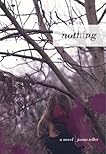
YA Book Review: nothing by Janne Teller

NothingNothing by Janne Teller

My rating: 4 of 5 stars

Pierre Anthon, a 14 year-old-boy, stands in the middle of a class and announces, "Nothing matters." He walks out of the classroom to sit for most of the rest of Dutch author Janne Teller's YA novel nothing in a plum tree.

And so the existential journey begins for the twenty classmates who witnessed Pierre's proclamation and pass him every day on their way to school as he rains plums at them with the reminder that nothing matters.

Twenty classmates find themselves hell-bent on proving to him and to themselves that something matters--and they hatch a plan. If they can each contribute something that matters from each of their lives, and completely give it up for good, then they can show Pierre Anthon that he is wrong and something does indeed matter.

The twist in their plan is that someone else chooses for each of them. For instance, one child told the narrator that she must give up her favorite pair of casual footwear (green flip-flops). This one hurt as the flip-flops were her favorite, but she gave them up nevertheless. The point is, if someone else chooses, and you can't refuse, then we are bound to find things in others which are painful to lose and therefore...meaningful.

They continue to pile their personal belongs together, one by one, in an abandoned sawmill. As we move through the story, each item becomes increasingly cruel and personal...and painful...and, according to the philosophy of their journey--meaningful. The choices the adolescents come up for each other with are eye-opening: forced mutilation, animal cruelty, exhumation, desecration of religious items, loss of sexual innocence, and homicide.

I've read often that the writer's job is to be cruel to his/her characters...well, Teller certainly abides by that formula. It would also come as no surprise to find people offended by at least one of the actions by the characters in this novel. I'm reminded of a time when a perturbed colleague tried to engage me in a debate about a Robert Mapplethorpe photograph which offended him: the crucifix submerged in a jar of urine. Teller's novel can be perceived as just as evocative especially considering it is for the YA audience.

Personally, I found the novel fascinating and very difficult to put down as this existential journey hurtles with skilled recklessness towards the conclusion. The themes in nothing resonate with echoes from The Lord of the Flies, The Catcher in the Rye, A Wrinkle in Time--all have been challenged by communities. The novel most likely will find some resistance in public school libraries and classrooms should it ever enter those domains, but I'll stand by my opinion that Janne Teller's nothing would make for some heady and healthy discussion with adolescents--just the opportunities for higher order thinking alone...yet, I can't put it in my classroom. Nevertheless, I am glad that I read it and am aware of it in case the opportunity to discuss it ever arises.


View all my reviews